

ADA Title II covers public transit like fixed route service and paratransit. ADA Title III covers every private transportation company offering ground transportation, including shared ride, shuttle bus, van service, and coach service. A Galveston demand-responsive service falls under Title III, meaning your service dog rides with you, no debate. Drivers follow DOT regulations, not personal preference.
What Makes a Service Animal Legal Under Federal Law
A service animal is a individually trained service dog that performs a specific task tied to a disability-related task. That includes a guide dog, hearing dog, seizure alert dog, diabetic alert dog, PTSD service dog, or mobility assistance dog. The trained animal must help with a physical disability, psychiatric disability, sensory disability, or mobility impairment. An emotional support animal is not a psychiatric service animal under this definition.
What Shuttle Drivers Are Legally Allowed to Ask
That ends their authority. A disability inquiry prohibition blocks any question about your condition. No medical documentation request, no certification demand, no registration card, no government issued ID. A vest requirement does not exist in law. A harness as proof is not legally required. Driver protocol stops at permissible inquiry.
When Boarding a Galveston Shuttle with a Service Dog
Your Federal Right of Access at the Door
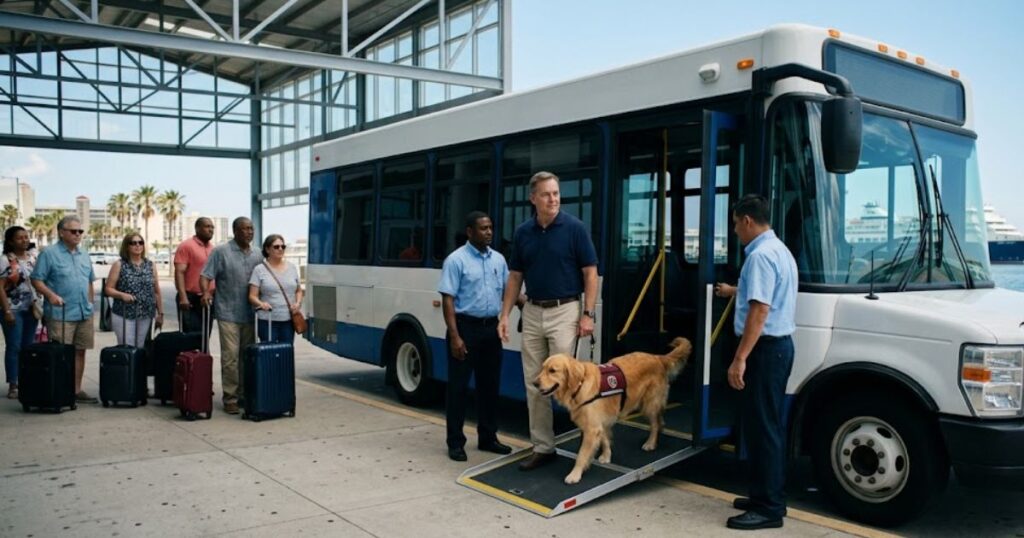
Boarding access to any Galveston shuttle is a federal right of access, not a courtesy. ADA guaranteed rights require private shuttle compliance and service animal admission without no extra charge or no additional fare. Handler accompaniment means your dog rides beside you, always. No separation policy applies from vehicle access through cabin access. That is enforceable federal law, backed by a DOT mandate.
When a Driver Can Legally Say No
A driver refuses boarding only on behavior based refusal grounds. An out of control animal showing aggressive behavior or creating a health and safety risk qualifies as a direct threat. That refusal stays not breed based, not size based, and not appearance based. Handler control removes the exclusion basis immediately. A calm, controlled dog gives the driver zero ADA exception to use.
Space Reality Inside a Shared Shuttle
Shared vehicle space inside a van interior or coach interior runs tight during busy Galveston cruise days. A large service dog needs floor space and aisle clearance near accessible seating or a front row access spot. Handler seating with beside-seat space works better than rear rows with no leg room. We always recommend requesting bulkhead seat placement when booking to avoid space constraint issues with passenger density.
What to Expect During the Shuttle Journey
Pickup Experience
Your pickup location matters more than most handlers realize. Reach the curbside pickup spot before your arrival window closes. Early arrival prevents a pickup delay that throws off the entire shuttle schedule. A good driver greeting includes service dog acknowledgment without any extra questions. The boarding process moves fast, so have your handler gear ready at the pickup point.
Onboard Environment
The shared vehicle environment brings a passenger mix you cannot predict. Noise level and vehicle vibration both act as a stress trigger for some dogs during longer rides. Air conditioning and climate control keep the cabin stable, which helps with anxiety reduction. A fellow passenger with a pet allergy or fear of dogs does not override your boarding rights. Sensory environment stays manageable when your dog stays calm and grounded.
Arriving at the Galveston Cruise Terminal
Terminal drop-off at the port of Galveston runs differently across cruise lines. The Carnival terminal, Royal Caribbean terminal, and Norwegian terminal each use separate cruise terminal access lanes. TSA style screening at terminal security applies to you and your dog equally. Port security staff follow cruise line policy, not ADA law, so know the difference before ship boarding process begins.
Pre-Travel Preparation Checklist for Service Dog Owners
Behavioral Readiness
Behavioral readiness starts long before the Galveston terminal. Public access training and vehicle desensitization separate a prepared dog from a stressed one. Distraction proofing and crowd exposure build the stress tolerance your dog needs in a shared space. A Canine Good Citizen or CGC certification shows your dog passed real obedience training standards. Strong handler bond and working focus keep controlled behavior locked in during the ride.
Pack This Before You Leave Home
Your bag needs a leash, harness, collar, and identification tag before anything else. Toss in portable water, a water bowl, food supply, and waste bags for the full trip. A travel mat or comfort blanket with a familiar scent item reduces stress in new spaces. Carry medication, vaccination records, and flea treatment documentation in one zippered pouch.
Papers That Help Even When Not Required
ADA documentation is not legally required, but smart handlers carry voluntary documentation anyway. A veterinary health certificate and rabies certificate answer questions before they start. Handlers with a DSM-recognized disability benefit from carrying a task description letter or psychiatric service animal letter. A mental health professional letter supports psychiatric service animal status at terminals that ask questions.
Time Your Arrival the Right Way
Book the earliest shuttle schedule slot on cruise departure day. Noise desensitization works better when your dog boards a less crowded vehicle. Socialization to port environments before travel day cuts reaction time in half. Handler ID and service animal identification card speed up the check-in process at busy Galveston terminals.
Service Dogs vs Emotional Support Animals on Shuttles
Legal Differences That Impact Your Travel
The service animal vs ESA gap is not a small one. ADA definition covers only dogs performing a trained task requirement tied to a recognized disability. An emotional support function or companionship function does not meet that bar on ground transport. The ACAA definition applies to air travel, not shuttles, so airline ESA policy means nothing at a Galveston pickup curb. Ground transport ESA policy gives private carrier discretion to apply standard pet policy application rules instead.
Why ESAs May Be Restricted or Denied
ESA denial happens because no ADA protection on ground exists for untrained animals. A no trained task animal rides as a pet, full stop. Unusual animal categories like a snake, reptile, ferret, rodent, sugar glider, or spider face automatic refusal. Even a large animal or oversized animal triggers a health and safety concern or cabin disruption review. Passenger allergy complaints carry weight when no federal protection applies.
How Misclassification Creates Travel Issues
Misclassification damages every legitimate handler who boards after a fraudulent claim. A fake service dog or ESA misrepresented as service animal triggers increased scrutiny across future trips. Drivers log documentation dispute incidents, which creates a complaint trigger pattern at terminals. Legitimate handler impact grows when discrimination backlash follows a travel disruption caused by someone else’s ADA violation by handler. Credibility damage from one untrained animal in public raises the bar for every real team behind them.
Comparing Transportation Options with a Service Dog
Shuttle vs Uber/Lyft
Rideshare carries the highest refusal risk for service dog handlers. Uber and Lyft both enforce an ADA rideshare compliance policy, but rideshare driver discretion breaks that policy constantly. A TNC or transportation network company deactivates drivers after confirmed driver refusal, but that fix comes after your missed ride. Inconsistent policy across a private vehicle network means app based booking gives zero boarding guarantee. Surge pricing adds cost on top of an already unreliable experience.
Shuttle vs Taxi
A taxicab operates under municipal regulation and city ordinance, making taxi ADA compliance more locally enforceable than rideshare. Local taxi Galveston drivers receive more consistent taxi driver training than gig workers. Still, driver discretion in a cab service produces refusal of service without a clear taxi complaint process in place. Metered fare also beats flat rate pricing on short Galveston runs, but that math flips fast with a Houston taxi on longer routes.
Shuttle vs Rental Car
Rental car options give driving freedom, but the total bill surprises most handlers. Daily rate, fuel cost, and Galveston parking fees stack up before you reach the terminal. Cruise terminal parking fee alone runs steep during peak cruise season. Texas highway navigation on an unfamiliar route adds driver fatigue and stress of driving that a shuttle rider never touches. Your dog stays calmer when you stay calmer, and self drive makes that harder.
Common Problems Travelers Face
Driver Confusion About ADA Rules
Driver confusion creates the most stressful boarding moments for service dog handlers. An ADA knowledge gap turns into incorrect policy application fast at a Galveston curb. A misinformed driver makes an documentation demand or asks an unlawful question beyond the two permitted ones. That crosses into passenger rights violation territory and becomes a logged discrimination incident. Staff training deficiency sits behind most driver overreach situations we see at busy terminal pickups.
Space Constraints in Shared Vehicles
A crowded shuttle at full capacity leaves almost no limited floor space for a large service dog. Van size and coach capacity determine whether your dog fits in the aisle without causing aisle obstruction. Luggage interference from overhead bags pushed to floor level creates a real space conflict mid ride. Dog repositioning during the journey becomes necessary when passenger density shifts after multiple stops. Physical constraint in a small vehicle builds stress for both handler and dog.
Passenger Reactions or Discomfort
Fellow traveler discomfort shows up in two forms on Galveston shuttles. A dander allergy or dog allergy triggers an allergy accommodation request, but ADA supersedes preference every time. Cynophobia or plain fear of dogs produces a passenger complaint or quiet objection to service dogs. Seating separation with better ventilation and air filtration near windows helps most animal allergy situations without conflict. Handler courtesy goes a long way, but it never replaces your legal right to board.
What to Do If You’re Denied Boarding
Your First 60 Seconds After a Refused Entry
Denied boarding feels shocking, but your next moves matter most. Stay calm and deliver a clear verbal statement of rights to the driver. Use the ADA two question reminder out loud so nearby witness information gets captured naturally. Record interaction on your phone immediately. Note the driver name, vehicle number, and exact time of incident. Photograph evidence of the vehicle and location before the shuttle pulls away.
How to File a Formal ADA Complaint That Works
An ADA complaint against a Galveston shuttle goes directly to the U.S. Department of Transportation. Submit through dot.gov using the official complaint form within the 180 day window from the time of incident. Your written complaint needs the incident report details you captured at the curb. DOT complaint submissions trigger a federal investigation when the formal complaint process finds an unlawful denial pattern. Keep copies of everything you submit.
Stop the Conflict Before It Starts
De-escalation works better than confrontation at a busy Galveston terminal. Carry an ADA wallet card that states your rights assertion without aggression in plain print. Make a pre-trip call to confirm service dog notification before departure day. Advance booking note fields let you add preemptive communication directly at reservation. Handler preparedness through calm communication and a factual statement cuts most conflict prevention situations down before they grow.
Why Choosing an ADA-Aware Shuttle Service Matters in Galveston
Not every Galveston transportation provider runs the same way. An ADA aware operator builds staff education into the job before a driver ever touches the wheel. Trained staff follow consistent policy on every Houston to Galveston route without exception. That operator accountability protects cruise passenger access at the terminal door. A federal compliance record separates a disability friendly business from one that just hopes nothing goes wrong.
Accessible transportation Galveston handlers need goes beyond a wide door and good reviews. A real ADA compliant shuttle runs a disability accommodation culture across every shift, not just during inspections. Inclusive travel on an airport shuttle Galveston route means handler trust stays intact from booking to safe travel drop off. Service quality and disability inclusive service together build the kind of reliable shuttle service that handlers recommend to other handlers. That word of mouth runs the Houston to Galveston route better than any ad ever did.
How $10 Galveston Shuttle Supports Service Dog Travelers
10 Galveston Shuttle runs a clear service dog welcome policy across its full vehicle fleet. Every booking covers vans buses coaches with zero exceptions at the door. Our no breed restriction and no size restriction rules mean every trained dog boards without debate. Handler accompaniment stays intact on every ride, and no additional charge applies for your dog. That no seat fee for service dog policy holds on every route we run.
Every driver follows a staff trained protocol built around real ADA field experience, not a printed handout. All service dogs permitted means the answer at boarding is always yes before you even ask. Handlers who want to confirm details ahead of time reach our accessibility contact directly during booking. That one call removes every worry before the Galveston terminal gets busy. Reliable access starts with a team that treats compliance as a baseline, not a bonus.
Booking Tips for Travelers with Service Animals
Advance booking through 10 Galveston Shuttle removes every guessing game at departure. Use online booking and hit book now early, especially during cruise season peaks. Add an accessibility note with your service dog notation directly in the reservation process field. Vehicle size selection between shared vs private determines how much floor space your dog gets. A private car upgrade works best for solo booking with a large dog. Group booking handlers benefit from early reservation slots before vehicles fill. Align your pickup with cruise departure alignment or flight arrival alignment during pickup coordination to avoid timing gaps. Your booking confirmation locks everything in before the Galveston terminal day arrives.
FAQs
Can a shuttle deny my service dog?
No, a shuttle cannot deny your service dog under ADA ground transport law. Unlawful refusal based on breed, size, or appearance violates federal rules.
Do I need papers for my service animal?
Documentation is not required by law for ground transport. Voluntary documentation like a health certificate is helpful but optional. No driver can demand documented rights as a boarding condition.
Can my dog sit on the seat?
Floor positioning is the standard for service dogs on shuttles. Handler discretion applies in some situations. Most operators follow a no seat contact policy to manage shared vehicle space.
Are emotional support animals allowed?
ESA shuttle policy differs from air travel rules. ADA vs ACAA law separates ground and airline rights clearly. Ground transport ESA animals carry no federal access protection like trained service dogs do.
What if another passenger complains?
ADA precedence protects your right to board over any allergy complaint or fear of dogs complaint. We handle every operator mediation situation with your access rights intact. Your dog stays.
Can I bring more than one service animal?
Multiple service animals are allowed when each performs a distinct task distinction for a dual handler need. $10 Galveston Shuttle reviews two dog accommodation requests case by case. Advance notice for multiple animals helps us manage vehicle space effectively.